Friday, January 4, 2013

Film Review: Zero Dark Thirty

“I don’t go to the movies to watch a reenactment of the news.” I was recently given this as an explanation as to why someone was not going to go see Zero Dark Thirty, and fair enough. I understand everyone has different tastes when it comes to their movie choices and I will respect that. When given this as an explanation I watched the trailers again and noticed an apparent issue with the advertising campaign: Zero Dark Thirty is not the story of the raid that resulted in the death of Osama bin Laden, it is about one woman who has dedicated her life to a mission and will do absolutely anything in order to complete it. Yes that mission is to find and kill Osama bin Laden, but that isn’t the point. This could very well be the story of a woman who wants to become president, this version just happens to be true. I also noticed the trailers almost go out of their way to not show that side of the story with Jessica Chastain having one spoken like (that did not make the final cut of the film) and less than ten seconds of screen time combined. Meticulously researched and considered to be remarkably accurate, Zero Dark Thirty will long be considered the definitive account of what occurred the years leading up to bin Laden’s death, at least until the official reports are declassified. In 2010 Katherine Bigelow had teamed up with her The Hurt Locker partner Mark Boal to create a film known as Untitled bin Laden Project. In 2011 the movie took a new ending and, from the sounds of it, a very different plot due to the successful raid on bin Laden’s Islamabad bunker. While I know nothing of what the original plotline entailed, I can’t imagine it would have been anything nearly as well done as this.

Before the screen shows any images the words “September 11, 2001” appear and for the next minute or so the screen remains black and we hear sounds of news reports, 911 calls, and the panic and hysteria that surrounded the day. There is a telephone call to a 9-1-1 dispatcher describing the intense heat and how scared she was. We hear a loud sound. The dispatcher says “Hello?” Nobody answers. Make no mistake, I am very much opposed to the idea of using 9/11 to draw a connection to characters (just ask me about another movie that does this, I will go on a tirade) and that is not Bigelow’s intention. She uses this minute to remind us what the world was like on that day. The aforementioned panic and hysteria, the entire world focusing on a solitary event, the sadness that followed, the lives lost. When we cameras first start rolling we are now in 2003 watching a POW being interrogated and tortured by Dan (Jason Clarke) with Maya (Chastain) watching on her first day in the field. The torture, including waterboarding, is clearly taking its toll on Maya, who is on her first day, but she refuses to watch from the monitor outside. She will get through this and she will prove to be strong and worthy of the job. Later in the film we find out she is so headstrong when the director of the CIA (James Gandolfini) asks when Maya was approached by the CIA. She says that she was recruited directly out of high school. He then asks what jobs she has been given since signing on and all she says is “to find bin Laden.” It’s the only job she ever had, and presumably the only one she ever wanted. She is perfect for it, or as one of her bosses puts it, “she’s a killer.” The torture does not directly lead to any useful information, however when they lie to the prisoner and tell him his info saved a lot of people and fed him solid food he decides to give the name of a messenger: Abu Ahmed. This single name would be Maya’s major point of emphasis over the next 8 years. Maya is convinced that this name carries significance and will lead her to where she wants to get. As the years go by she is present at a hotel bombing, her car is shot at, and her friends die. All this time passes and her lead is a dead end and bin Laden is still out there.

The rest of the story is well documented and unnecessary to go over here. What is necessary to mention is the brilliance of Chastain. She manages to become unrecognizable in her portrayal of Maya. This is without using prosthetics, massive weight gain/loss, or any of Hollywood’s other makeup tricks because she doesn’t physically transform at all. The mentality and power of her performance left me forgetting I was watching an actress at work and instead had me believing this was just Maya. She manages to stand out among an all star cast of supporting characters in Mark Strong, Kyle Chandler, Harold Perrineau, Mark Strong, Fredric Lehne, Mark Duplass, James Gandolfini, Joel Edgerton, Chris Pratt, Taylor Kinney, and Mike Colter. I came into the movie as a big fan of Chastain from her work in Take Shelter and The Tree of Life, not to mention her Academy Award nominated work in The Help, but I left the theater as a believer that she is one of the best actresses currently working. The perfect examples is after Maya has found what she believes to be the compound where bin Laden is staying she decides to write 21 in red on her bosses window for the number of days that have passed without anything happening. She is shown multiple times changing this number and she brings something new and more frustration each time it happens. It’s a small thing, but those are where actors show their true skill.

As far as the movie is concerned, ignore the Senators debating about the realism of the torture scenes, the fact that you know how it ends, and the idea that this is just glorifying the murder of a man (justified or not) and realize this is a movie about something much smaller. The president who declared the war on terror is never screen or mentioned and the president who ordered the raid is never mentioned by name and is only shown on a television explaining to an interviewer that the U.S. is a peaceful nation that will not torture people, while Maya watches with a look that practically screams “but then we could get somewhere!” This movie was not made from the left or right-wing perspective and it was not made to glorify or damn torture. It was made to show one woman’s remarkable fire and determination through a 12 year journey. 40% of her entire life was spent for this one mission and she has given everything for it. The final scene after she gets what she wants, what she was recruited and trained to do, tells us everything we need to know.

A

Monday, December 31, 2012

The 5 Best Films of 2012 You Didn't See

Since I cannot create a true top 10 of 2012 list quite yet (it will be available after screening Zero Dark Thirty and The Impossible the first weekend of January), I figured I would create a list to bide the time. When looking at the year that was 2012 I noticed that there were some fantastic smaller films that I wanted to give notice to. While a couple of these films will make the yearend top 10 list, leaving any of them completely off the radar just felt wrong. There were a couple films that I wanted to include, but felt that they became too big to be considered (Moonrise Kingdom, The Perks of Being a Wallflower and Beasts of the Southern Wild, all of which are fantastic and would have been in the running). I looked at box office business to narrow down the true indies and decided that my cutoff point would be movies that made less than $10 million.Without further ado here is my list of top 5 films that couldn’t even make $5 million at the box office.

5) Take This Waltz

After watching Michelle Williams steal the show I posed a question to some friends: What was the last movie with Michelle Williams where you walked out and weren’t depressed? The only answer that was given: Dick. In the last 13 years Williams has found many ways to break our hearts and Take This Waltz may be one of her better efforts. The Sarah Polley film is another love triangle, this time with Luke Kirby and Seth Rogen. What is interesting about this one is it isn’t about picking a new love (Kirby) or an old one (Rogen). Instead, it’s about love vs. passion and neither side really wins in a true “grass is always greener” film. There is so much to say for Williams’ on screen marriage to Rogen and how perfect it seems, yet just as much to say for the idea of what could occur between her and Kirby. Throw in an alcoholic, against-character supporting turn from Sarah Silverman and you have one of the best indie films of the year.

4) Ruby Sparks

This was a film that I desperately wanted to see when it came out, yet always ended up putting off for other things. I had read how much critics loved it and it was incredibly intriguing to me, I just couldn’t bring myself to watch it. Then I saw it and I hated myself for waiting. The film’s star and writer Zoe Kazaan created what seemed to be the ideal scenario of a lonely writer (Paul Dano, Kazaan’s real-life boyfriend) who wrote the perfect girl for him. Then she came to life. Nobody believes such a thing could happen until at a dinner party Dano and his brother (Chris Messina) test it out by writing instructions for Kazaan to unknowingly speak in French. Dano makes the honorable decision to no longer write and change her, but instead to let her live her life with him. That all works until she begins to be independent of him and he returns to his lonely state. The plot sounds ludicrous but feels so real in context. I was stunned by how heartbroken and happy this film made me.

3) Sleepwalk With Me

Mike Birbiglia has a sleepwalking problem. He decided to create a comedy show out of it. That was successful and turned into a comedy album. That worked out alright so he turned it into a book. It sold enough copies that he created a one man show on Broadway. The show was successful so he wrote a screenplay, direct, star and essentially just make a movie out of it. That movie placed number three on this list and if that is worth anything, maybe he will get a miniseries on HBO next or something. The first time I watched Sleepwalk With Me it all felt very familiar because I had seen/read the previous iterations of the story. It was the second viewing that destroyed me. Poignantly funny and such a great commentary on human interactions, this film is everything I could have hoped for. Lauren Ambrose plays Birbiglia’s girlfriend to absolute perfection, even as Birbiglia is busy kicking a laundry basket and claiming it to be a jackal.

2) Celeste & Jesse Forever

Rashida Jones and Andy Samberg are close friends who got together to create a doomed marriage onscreen. Written by Jones, the movie begins with showing the couple as separated and going through their divorce proceedings. Despite this they act completely married and in love. It turns out they married their best friend, which was perfect for a while. It fell apart for all of the reasons relationships tend to fail, but that isn’t what is so intriguing. Instead, it’s the act of watching two people both wanting to reconcile, just never at the same time. There becomes a point when Chris Messina shows up as a potential love interest for Jones and asks the cliché (but it doesn’t matter because it works) question of “Do you want to be right, or do you want to be happy?” It gets to Jones’ Celeste as she realizes that she can’t have both. Watching two people who clearly love each other and just as clearly will never have each other fight is the most heartbreaking, yet justified thing I have seen on screen all year.

1) Safety Not Guaranteed

No surprise to those who know me, this is one of the films in the running for my top 10 of 2012 and there was no way it wouldn’t top the list of indie films. While the film combines some of my favorite things (Western Washington, Jake M. Johnson drunk go-karting, Aubrey Plaza’s no sense in nonsense vibe from her Parks and Recreation alter ego, a turtle, and of course Kristen Bell) it’s the storyline that keeps me coming back. I saw this film with multiple people and all had the same giddiness while walking out of the theater wanting to watch it again. The duration of the film you are trying to figure out if Mark Duplass’ character who put an ad in a newspaper looking for a companion to time travel is insane or just suffering from Asperger’s. In the end, it turns out it doesn’t really matter. What does matter is the effect he had on the people he knew. The film flirts with being hilarious (Lynn Shelton’s cameo especially), heart-warming, dramatic, and science-fictiony simultaneously and is just a marvel to watch again and again.

Honorable Mentions: Your Sister’s Sister and Compliance.

Wednesday, December 26, 2012

Film Review: Django Unchained

Twenty years ago a wunderkind filmmaker burst onto the scene with a movie about a jewel heist that managed to show both the events before and after, but never during the actual heist. Little did the world know them, that writer/director would go on to create seven (and counting) classic genre-based movies that would revolutionize cinema. Quentin Tarantino has become known for his pop-culture filled, fast-paced dialogue, time-jumping editing, fantastic soundtracks, women’s feet, and cartoonish violence and in Django Unchained (the D is silent, as Django will tell you himself) he does it all again, only this time as a Western. While now that we have grown wise to Tarantino’s style and tricks, there is something magical about watching it all fold out on screen. Perhaps it’s his choice to keep his films spread out (Inglourious Basterds was his last release in 2008) or maybe it’s just that it works. Regardless, Django Unchained came to theaters as one of the most anticipated original stories of the year.

The first shot is simple and perfect, a mountain range in the west as yellow title cards pop up. Combined with the score, the setting immediately gives you the feel of a 1960’s western. From there we are shown to be in rural Texas two years before the Civil War where we meet Dr. King Schultz (Christoph Waltz) and his horse Fritz, who will bow his head upon introduction as he pulls up to a couple of slave traders and their slaves looking for a slave named Django (Jamie Foxx) to help him collect a bounty. The scene is everything you expect Tarantino to deliver: Funny, violent so over the top it is also funny, witty, and just plain fun. King buys Django, despite being very much opposed to slavery and offers him an agreement: Help him find the three Brittle brothers and he will earn $25 per brother as well as his freedom. King does not Treat Django as a slave and cares not for the typical rules. They ride into town together and use the town’s shock at a negro on his own horse to their advantage in collecting one of the many bounties King is trying to collect. While it would seem that a manhunt for three brothers could easily be the main plot for the movie, instead they are found rather quickly, killed, and taken for reward. Where the film really picks up is when Django talks about his wife Broomhilda (Kerry Washington). Immediately King is sympathetic to Django’s story of love and loss and due to their unique circumstances, is willing to help try reunite the pair. This decision brings us to Candieland, the plantation of Calvin Candie (Leonardo DiCaprio). The film takes off from there and becomes more intense, funny, violent, and overall fun. Leonardo DiCaprio plays his part to perfection and gives one of Tarantino’s famous monologues so well that he completely steals the show from the marvelous Christoph Waltz. Samuel L. Jackson makes his obligatory appearance (having appeared in all but two of Tarantino’s films) as Stephen, the head house slave of Candieland and a man who looks out for his owner instead of his own race.

Tarantino has been quoted as saying that when he writes minor characters, he pretends that they are the star of their own movie, and we just get to see a small snapshot of it. This is definitely the case as all of the minor characters end up having their moments of complete brilliance. There is even a point where I couldn’t remember the last time Django, the film’s lead, had a line at one point. This gives the movie a much more rounded out feel void of flat characters. A lot of critics have been divisive on Django Unchained so far, often saying Tarantino is relying too much on style over substance. I think it is simply unfair to knock the movie down a few pegs simply because what he does works and he has become more natural. The last film that critics split on was Jackie Brown, which has since become his best reviewed movie not titled Pulp Fiction. While the film may not be his masterpiece, it is by no means a weak link in the chain of fantastic movies that make up his filmography. As long as you can stomach the violence and the liberal use of the N word (102 times by my count), then Django is a must see and one of the best films of 2012.

A

Wednesday, December 19, 2012

Film Review: This is 40

Five years ago Judd Apatow gave us the pregnancy-based rom-com Knocked Up. Two of the supporting characters admittedly stole the show so he decided to make a “sort-of sequel” revolving around them and titled it This is 40. The film is centered on record producer Pete (Paul Rudd) and clothing store owner Debbie (Leslie Mann, Apatow’s real life wife) as they both turn 40 the same week and try to cope. As with Apatow’s last film, Funny People, This is 40 attempts to take on a more serious approach to life. Unlike Funny People though, this film manages to pull it off.

While the film may be more serious at times, it still finds plenty of room for the patented Apatow brand of humor. The movie starts off with a fight over whether or not taking Viagra to have sex with your wife should be considered a present or an insult (Spoiler: you are probably not going to win the present argument with a woman). Pete’s record company is going through some tough times and they are having money troubles at home, not that Debbie is aware of them. As the family is driving (complete with daughter’s  Sadie and Charlotte, played by Maude and Iris Apatow) Pete is trying to get them to enjoy the “real music” of his newly signed act Graham Parker and The Roumer. The females are not having it and just want to listen to top 40 “happy” music, such as “Video Killed the Radio Star.” Pete’s inability to understand what the general public wants, let alone his own family is proving to be the downfall of his company. It also doesn’t help that he has loaned $80,000 to his father (Albert Brooks) recently. Debbie has a whole other problem at her clothing store: They are missing $12,000. The suspect is Jodi (Megan Fox) who has been caught having sex in the store before and consistently is coming in with new high-end clothes and recently bought a new Acura. Fox plays up her beauty for the character, but is also surprisingly funny in her supporting role.

These financial issues are just the background of the true issue of dealing with getting older and trying to figure out if you are living the life you wanted. The climax occurs at the birthday party where the film feels a little strange. Not because of anything that occurs on screen, although that is purposely strange. Instead it’s the omission of Knocked Up’s Katherine Heigl and Seth Rogen that is questionable. Not only was Katherine Heigl’s character living with Pete and Debbie in the first film, but there are even kids at the party that would be approximately the same age as the couple’s child. Once you get over the fact that this has less to do with making sense in the film, and more to do with Heigl’s disparaging comments towards the film you see there is still a lot to love. This includes scene-stealing cameos from the Apatow regulars including Jason Segel, Charlyne Yi, Chris O’Dowd, Lena Dunham, and Melissa McCarthy and even the non-regular John Lithgow. If turning 40 is anything like This is 40, I think I will be ready for the ride. Spousal anus exams not included.

B

Monday, December 17, 2012

Film Review: The Hobbit: An Unexpected Journey

A member of the Baggins family is persuaded by Gandalf to join a crew on an adventure to a dangerous location out of sheer selflessness, then they encounter unexpected attacks from Orcs and other supernatural inhabitants of Middle Earth only to become battered, but intact. The film ends on an extremely long shot showing the desired destination, and that they are still quite a ways from reaching it. This is both the plotline to The Hobbit: An Unexpected Journey and The Lord of the Rings: The Fellowship of the Ring. While this isn’t the worst scenario in the world, it certainly wasn’t the best either.

Can a prequel of a beloved series ever live up to the hype? I was asked a question shortly before seeing The Hobbit and I didn’t really have a definitive answer. I say yes because I truly feel that it is possible to do so, but I also say no because it hasn’t really worked out yet. Reboots have been successful (Star Trek, Batman Begins) but not prequels. With The Hobbit there was hope to break this chain. Peter Jackson was very hands on in the pre-production process even before he decided to come back and direct. Considering the last time Jackson entered Middle Earth he walked away with Oscars for Best Director and Best Picture this seemed to be a very promising sign. The pitfall, however, seems to be that this wasn’t something new for Jackson and the final product feels like he simply went through the motions.

The first scene of the film is an extended version of the beginning of The Fellowship of the Ring, with Ian Holm reprising his role as Bilbo Baggins sitting down to write his memoir of the new trilogy we are about to embark on, and includes Elijah Wood’s very brief cameo as Frodo. The scene plays out to show that this is occurring right before Gandalf shows up at The Shire “precisely when he plans to.” The reason I bring up this scene is it’s completely unnecessary and only used to give the audience the feeling that these stories are connected. If Jackson would have simply shown some patience, he would have seen this to be completely redundant towards the rest of the movie. Looking back, I find Fellowship to be my least favorite of the Lord of the Rings trilogy due to its slower pacing and the fact that it is essentially just a set up for the other two. Before the remaining films came out though, I was enthralled with the movie. The reasoning for this is straightforward enough: this was a whole new world, something that had never been seen on the big screen before and there were dozens of major characters to become acquainted with. In this iteration of a new trilogy Jackson relies too strongly on the same tricks and structure but although the dwarves are new, Thorin Oakenshield (played brilliantly by Richard Armitage) is the only one who truly gets any sort of background or specific personality. Aside from him, too many of these characters are old news. It was exciting to see Hugo Weaving and Cate Blanchett back as Elrond and Galadriel respectfully, but it wasn’t enough to support a movie of characters we already know beginning on this journey.

Don’t get me wrong, there are definitive bright spots to the movie as well. The aforementioned Thorin, Martin Freeman was a fantastic choice for the young iteration of Bilbo, the music was improved on, there were shots that were absolutely gorgeous, and Ian McKellan’s Gandalf is always a welcome sight. I would even recommend seeing the movie in theaters due to its scope and spectrum, just don’t expect a reinvention of the wheel. This is definitely more of a retelling of the wheel. The real question is whether the movies can pick up steam like they did for The Lord of the Rings. Only time will tell if Jackson’s decision to turn the 300-something page book into a 3 movie, 9 hour experience will be the right call. Based on his previous trip to Middle Earth I am willing to give him the benefit of the doubt. One misstep of retread can be forgiven.

C+

Tuesday, December 11, 2012

Film Review: Killing Them Softly

I have previously mentioned Andrew Dominik is cynical of the American public. What I have not previously explored was just how much more cynical he is of the American dream as a whole. In Killing Them Softly he takes the time to make sure you understand that he doesn’t buy into what the politicians and the hopeful are trying to sell. The opening scene places the camera staring at a deserted urban street in the middle of the day with a voiceover of one of Barack Obama’s 2008 campaign speeches. Before you can get settled in, the screen cuts to black with a loud, piercing note and title cards show. These two different styles repeat themselves but as soon as you think you have figured out the rhythm to these cuts, Dominik changes it up completely. This technique is used to both show the setting of the film as well as keep the audience off balance. It’s jarring and effective.

The first character we meet is Frankie played by Scoot McNairy who feels like he is trying to mimic Casey Affleck throughout the film. Throughout all of his scenes I got the feeling that Dominik tried to maintain the leading duo from his previous film The Assassination of Jesse James by the Coward Robert Ford, but instead found someone who could act as similarly as possible. Frankie is a young punk who teams up with his lifelong friend Russell (Ben Mendelsohn) to hold up a backroom casino, a job given to them by their small-time neighborhood mob boss Johnny Amato (Vincent Curatola). The job goes according to plan and of course the people who lost out on their money want answers. For that they turn to Jackie (Brad Pitt), a  hitman who only kills people he doesn’t know. He likes to kill people “soflty and from a distance.” It seems every killer has their “code (to steal a word from Dexter) these days, and if that’s how Jackie wants to do it he will need help with one of the men he just so happens to know. For this he convinces the nameless character played by Richard Jenkins to hire Mickey (James Gandolfini). Gandolfini is the star of this show as a down on his luck hitman who has two goals every day: drink and sleep with as many prostitutes as he can.

The rest of the plot is pretty straightforward and predictable, all happening with random cuts of both Senator Obama’s hopeful speeches and then-President George W. Bush’s confidence in the country’s ability to rebound from the financial collapse that we all remember so well. What sets the film apart with such a standard plot is the stylization and beauty of the cinematography. The scene where Jackie makes his first hit in particular is just fun to watch for the effects used and placement of the camera. As his previous films have shown, this is what Dominik excels at. His films will always look fantastic. More than that, the final monologue that Jackie gives to Richard Jenkins just does a complete stab, twist, pull action to the American dream that will have you thinking while the credits role. The biggest issue with the film is the running time. At 97 minutes it is almost a full hour shorter than the aforementioned Jesse James was and it manages to miss the details and nuances that make that film a masterpiece and leaves Killing Them Softly a simply above average film.

B-

Friday, November 16, 2012

The Deconstruction of The Assassinaiton of Jesse James by the Coward Robert Ford

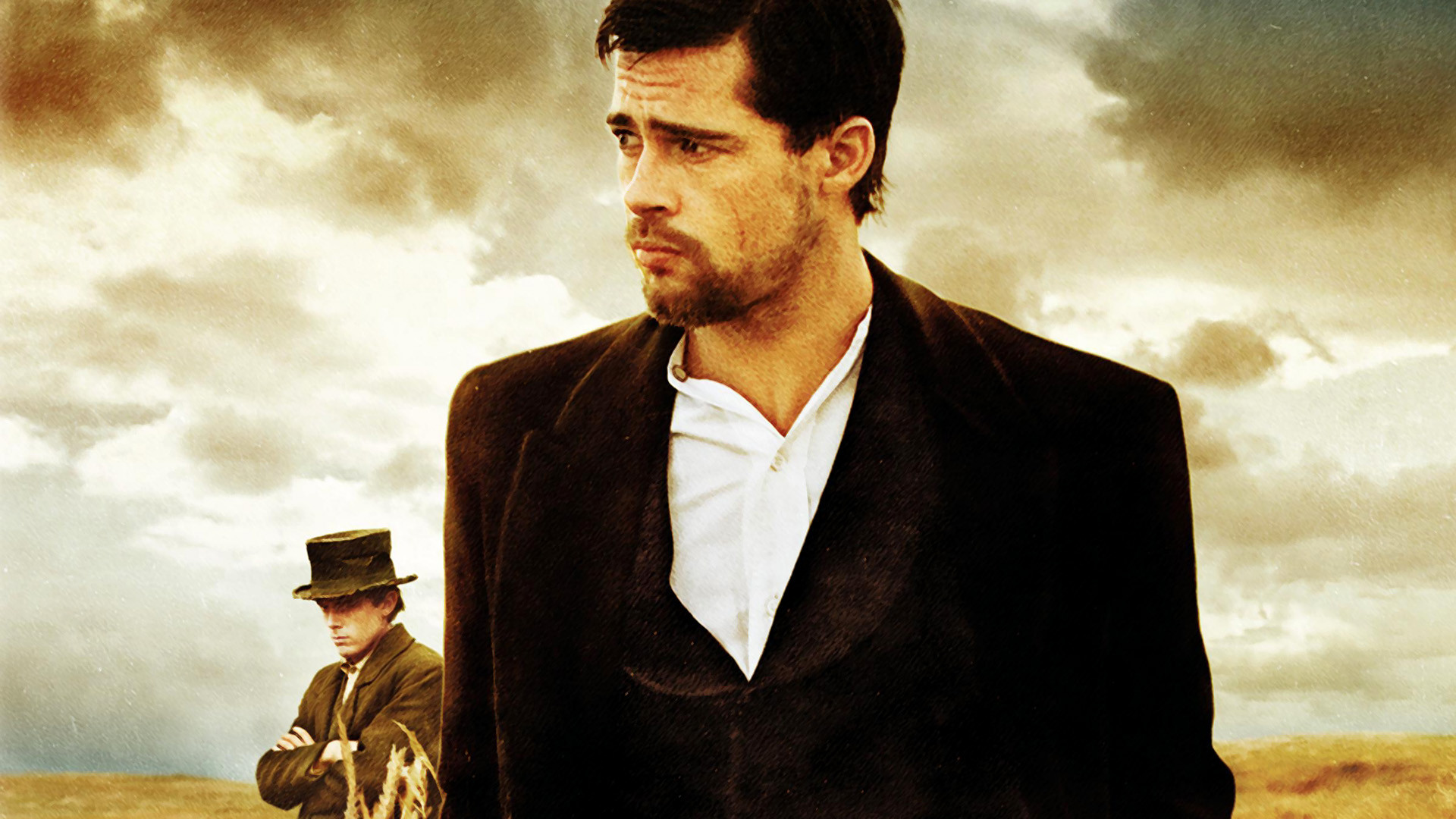
Brad Pitt and Casey Affleck as Jesse James and Robert Ford

As the duo of Andrew Dominik and Brad Pitt prepare to release their second collaboration Killing Them Softly, the time has never seemed so perfect to get on my soap box and hail praises to one of the most underrated, under-discussed, and least appreciated films of all time. The Assassination of Jesse James by the Coward Robert Ford boasts a cast of the aforementioned Brad Pitt, Casey Affleck, Sam Rockwell, Jeremy Renner, Mary Louise-Parker, and Zooey Deschanel,, a title that, although long, is rather memorable, and is about one of the most famous bandits in American history. Despite this, the film wasn’t even able to break $4 million at the box office. Sometimes films like this are able to create a “cult” status among a fan base, this again, was not the case. Unfortunately, The Assassination of Jesse James by the Coward Robert Ford has been destined to carry on as a film seen by few, remembered by less, and known solely for its sentence of a title. With a title this descriptive it is hard to think that there is any mystery or interest at all in the plot, especially one that takes 160 minutes to unfold. The interesting part of this story is not that Robert Ford killed Jesse James, nor is it why, as Robert will say himself “He was going to kill me first… and the reward money.” What is interesting about this story is both watching how such an admirer of Jesse James could later turn into his killer and the most fascinating aspect is simply the use of the word “assassination” in the title.

The first scene for Robert “Bob” Ford (Casey Affleck) shows him a youthful man trying to woo Jesse’s brother Frank into allowing him into the James Gang. The beauty of these opening scenes is seeing Bob’s wide-eyed admiration for Jesse (Brad Pitt). He has his whole life ahead of him and all he wants to do is be just like the infamous Jesse James. After that first night’s train robbery there is an exchange that is incredibly telling of both Bob’s past and Jesse’s experience. While sitting in chairs on the porch, smoking cigars Bob pulls out a newspaper clipping he has describing the two James brothers to ensure that he wouldn’t get the two confused upon first meeting them. Jesse turns towards Bob and simply asks him “Do you want to be like me, or do you want to BE me.” The remainder of the film’s first two hours are spent dealing with the next two years of Bob and Jesse’s lives whilst they are together and apart trying to answer that very question. Where the movie gets creative is instead of relying on a betrayal ,specific act, or major epiphany that turns Jesse from Robert’s hero to enemy, there is instead a gradual buildup of realization that Jesse is not the hero the media has portrayed him to be. Charley Ford (Sam Rockwell) has tried to explain this to Bob since the beginning. His warnings are ignored, however, because Charley has never been the brightest person in the world. The slow buildup and the dynamic that forms between Robert Ford as he begins his quest to kill Jesse James is impossible to ignore and makes the film a worthwhile watch on its own.

It doesn’t spoil anything to say that Bob succeeds in his attempt to kill Jesse James as it is implied in the title. The only lie in the title is that he does not assassinate him. Assassinations are for Presidents, leaders, and heroes. Jesse James was none of these things. It was previously mentioned that the media once portrayed Jesse James as a hero or even as a modern day Robin Hood. The most intriguing aspect of this portrayal is how much it still applies. Jesse James was a member of the Confederate Army and because of this was thought to be a Southern Loyalist and would only rob to help fellow Southerners in need. There is no evidence to substantiate these claims as Jesse would kill or rob anyone as long as it helped out himself. The movie takes note of this fact and refuses to build him up as the hero the country so desperately needed. Instead, Pitt and Dominik portray Jesse James the way they felt he truly was; an outlaw trying to get rich. The portrayal was so accurate that descendants from the James family has called it the most accurate version of Jesse James on film. Unfortunately for Jesse, that means he was no hero and is unworthy of the praise and admiration he receives. The title of this movie is very precise and it is believed that is the reason Pitt had it written in his contract that it could not be changed. More than just showing an admirer and friend turn into a vengeful assassin, this movie is about what is wrong with society’s portrayal of an essentially evil man. Jesse James is not all bad. He seemed to be great with both his wife and his kids. His moral compass was clearly broken or ignored. The more disturbing portion of the movie’s portrayal of events occurs after Jesse’s death. Robert Ford should be considered a hero for his actions. He was able to take down a wanted man who was planning his next robbery. As the movie focuses on his life after the murder he is talking to his girlfriend Dorothy Evans (Zooey Deschanel) and he tells her “You know what I expected? Applause… They didn’t applaud.” There was a period of time where more people could correctly identify Robert Ford than the President of the United States, but that fame came with animosity. The public ended up taking Jesse’s side and considered Bob a coward for both murdering his friend and for doing so by shooting him in the back. What ends up being most bothersome is what the narrator says as the final minutes play out about Bob:

Even as he circulated his saloon he knew that the smiles disappeared when he passed by. He received so many menacing letters that he could read them without any reaction except curiosity. He kept to his apartment all day, flipping over playing cards, looking at his destiny in every King and Jack. Edward O'Kelley came up from Bachelor at 1 P.M. on the 8th. He had no grand scheme, no strategy, no agreement with higher authorities. Nothing but a vague longing for glory, and a generalized wish for revenge against Robert Ford. Edward O'Kelley would be ordered to serve a life sentence in the Colorado Penitentiary for second degree murder. Over seven thousand signatures would eventually be gathered in a petition asking for O'Kelley's release, and in 1902, Governor James B. Ullman would pardon the man. There would be no eulogies for Bob, no photographs of his body would be sold in sundries stores, no people would crowd the streets in the rain to see his funeral cortege, no biographies would be written about him, no children named after him, no one would ever pay twenty-five cents to stand in the rooms he grew up in.

The underlined portion is the most upsetting. A man who had never met Bob hated him so greatly that the only solution was murder and because he killed the man who lawfully killed Jesse James, the public sided with him. He committed murder against an unsuspecting man and was pardoned because that man shot the infallible Jesse James. While these events transpire over the last moments of the film, a case could easily be made that a better title could be The Assassination of Robert Ford, the Man Who Killed Jesse James, by the Coward Edward O’Kelley.

One of the most beautiful films ever made from story, to cinematography and from acting to score, deserves a watch despite the title explaining the end of the story. The movie doesn’t care about what happened nearly as much as why it happened and how society hasn’t changed as much as we would like to think. No, the public’s memories of Robert Ford will never be as fond as Jesse James and he will not be memorialized or idolized by the masses. That doesn’t matter because Andrew Dominik has swayed one man’s opinion of Bob. Mine.